EN
EN



Can solar battery charge in cloudy weather?
How Cloud Cover Affects Solar Battery Charging
The Science: Diffuse Irradiance and Photovoltaic Output Reduction
Solar panels create electricity when they turn sunlight particles called photons into electric current. When clouds roll in, the direct sunlight gets scattered around, creating what's known as diffuse light – basically sunlight that's spread out and not as intense. Even though solar cells can pick up on most types of visible light plus some infrared wavelengths, this diffuse light only gives about 15 to 25 percent of what we get on sunny days according to studies from NREL back in 2023. Fewer photons means lower voltage coming out of the panels, which naturally cuts down on total power production. The worse the cloud coverage gets, the bigger hit solar systems take in terms of performance.
- Light clouds allow 50–70% light transmission
- Heavy storm clouds reduce transmission to just 5–15%
Charge controllers help maintain efficiency by optimizing voltage conversion, but solar battery charging rates inevitably slow as input energy declines.
Real-World Data: Efficiency Losses Measured by NREL and Field Installations
The National Renewable Energy Laboratory (NREL) confirms that PV output typically drops 20–50% during overcast conditions—and up to 65% under heavy cloud cover across U.S. residential installations (NREL Annual Technology Baseline, 2022). These losses extend charging time and strain battery health:
| Condition | Power Output | Charging Time Increase |
|---|---|---|
| Clear Sky | 100% | Baseline |
| Moderate Clouds | 30–50% | 2–3× longer |
| Heavy Rain/Clouds | 5–20% | 5–8× longer |
Prolonged partial-state-of-charge cycling accelerates degradation—especially in lead-acid batteries, where capacity loss can reach 40% annually under intermittent input (Ponemon Institute, 2023). MPPT charge controllers mitigate this by improving energy harvest by 10–25% compared to PWM systems, though they cannot eliminate weather-driven delays.
Critical Components That Determine Cloudy-Weather Performance
Charge Controllers: Why MPPT Outperforms PWM Under Low-Irradiance Conditions
MPPT controllers beat PWM units hands down when it comes to performance in low light conditions, giving around 20 to 30 percent more usable energy on cloudy days. While PWM controllers stick to a set battery voltage, MPPT versions keep looking for that sweet spot between voltage and current, grabbing as much power as possible even when there's only weak or scattered sunlight available. Tests in labs have found that MPPT controllers maintain about 94% efficiency even through thick clouds, compared to roughly 70% for their PWM counterparts. That makes all the difference for anyone relying on solar batteries to keep going when the sun isn't shining brightly.
Battery Chemistry: LiFePO4 vs. Lead-Acid Response to Intermittent Solar Input
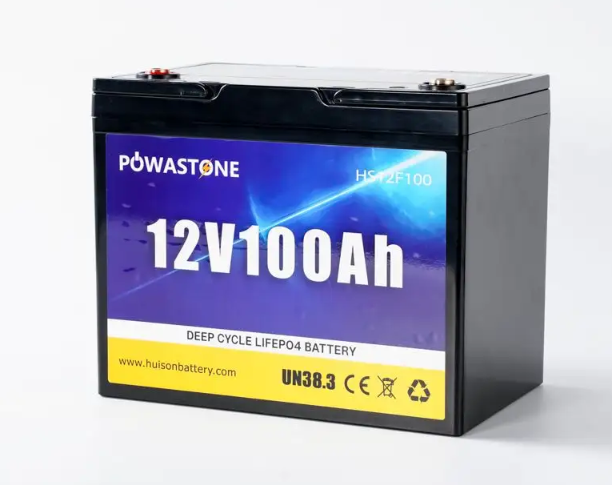
Lithium Iron Phosphate or LiFePO4 batteries work really well with solar systems that have fluctuating inputs. These batteries typically offer around 95 to 98 percent round trip efficiency and accept charges even at lower current levels. They keep their voltage stable when only partially charged, something traditional lead acid batteries struggle with. Lead acid versions tend to experience voltage drops and develop sulfation problems whenever they're cycled below about 50% charge level. When solar conditions aren't consistent, most lead acid batteries lose somewhere between 15 and 20% capacity each year. Meanwhile LiFePO4 cells hold onto about 80% of their initial capacity after going through roughly 2000 charge cycles, even when not fully charged. This makes them much better suited for those long periods of overcast weather that can plague solar installations.
Practical Strategies to Maximize Solar Battery Charging in Overcast Conditions
While cloud cover reduces solar irradiance, strategic system design and maintenance can significantly boost charging efficiency. Implement these proven approaches to sustain solar battery performance during low-light periods:
- Optimize Panel Placement: Install panels at latitude-adjusted tilt angles to capture maximum diffuse light, and eliminate shading from trees or structures. Regular cleaning prevents dust buildup—which alone can cut output by up to 25%.
- Prioritize MPPT Technology: MPPT controllers extract up to 30% more energy than PWM alternatives under cloudy skies by dynamically adapting to shifting voltage-current relationships.
- Oversize Solar Arrays: Increasing panel capacity by 30–50% compensates for reduced yield, helping maintain sufficient charging through consecutive cloudy days.
- Select Advanced Battery Chemistry: LiFePO4 batteries deliver superior low-light charge retention (95%+), deeper cycling tolerance, and greater longevity than lead-acid under variable solar input.
- Implement Smart Charging Cycles: Use controllers with real-time monitoring to schedule charging during peak daylight intensity—maximizing energy capture when it’s most available.
These measures ensure solar battery systems remain resilient and functional despite weather fluctuations, with proper sizing and component selection being foundational to sustained off-grid reliability.
Beyond the Panel: Complementary Solutions for Reliable Solar Battery Operation
Hybrid Systems, Grid-Tied Backup, and Smart Energy Management
Cloudy days can really cut down on solar power production, but hybrid setups that combine solar batteries with grid access or other power sources such as wind turbines keep things running smoothly. When there's not enough sunlight for long periods, grid connected systems will kick in automatically, switching to regular electricity from the utility company. This helps save battery life while still powering essential equipment. Intelligent energy controllers make all these components work together better, ensuring that homes and businesses stay powered even when weather conditions aren't ideal for solar panels.
- Prioritizing essential loads during shortages
- Deferring non-critical consumption to peak production windows
- Seamlessly switching between sources based on real-time availability and forecasted conditions
Residential deployments using such integrated strategies reduce grid dependence by 37% (NREL Residential Energy Study, 2023), transforming inherently intermittent solar input into predictable, dispatchable power.
FAQ Section
How do clouds affect the efficiency of solar panels?
Cloud cover reduces the amount of direct sunlight reaching solar panels, which leads to a decrease in energy production. Solar panels can still operate under diffuse light but at a much lower efficiency, typically resulting in output reductions of 15-25% on cloudy days.
What is the role of MPPT charge controllers in solar systems?
MPPT charge controllers enhance the efficiency of solar systems by dynamically adjusting the electrical load and optimizing power extraction even under variable light conditions, providing about 20-30% more energy compared to PWM controllers, especially in cloudy weather.
Why are LiFePO4 batteries preferred for solar systems?
LiFePO4 batteries offer high efficiency, excellent charge retention, and long lifespan, and they perform well even under intermittent solar input conditions, making them ideal for solar systems with fluctuating energy levels.
How can solar panel efficiency be maximized during cloudy conditions?
Optimizing panel placement, using MPPT technology, oversizing solar arrays, selecting advanced battery chemistry, and implementing smart charging cycles are effective strategies to maintain high solar panel efficiency during cloudy conditions.